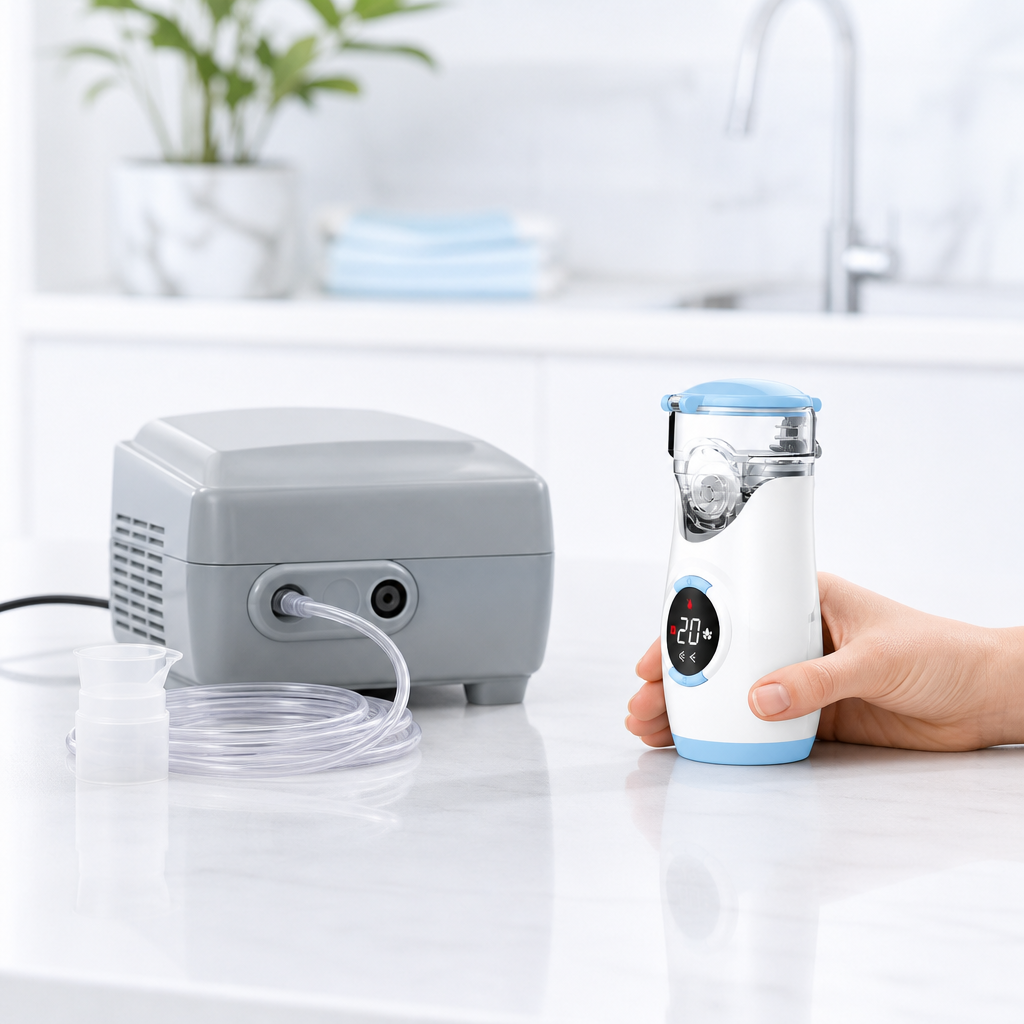
If you use a nebulizer at home, you probably know the routine. A compressor on the table, a cord to the wall, a hose to the cup, and a motor running for the whole session.
We set that familiar setup next to PureBreathe, a mesh nebulizer that fits comfortably in one hand, and used both the way you would at home. These are the six differences that stood out.
The bigger machine is not doing more work
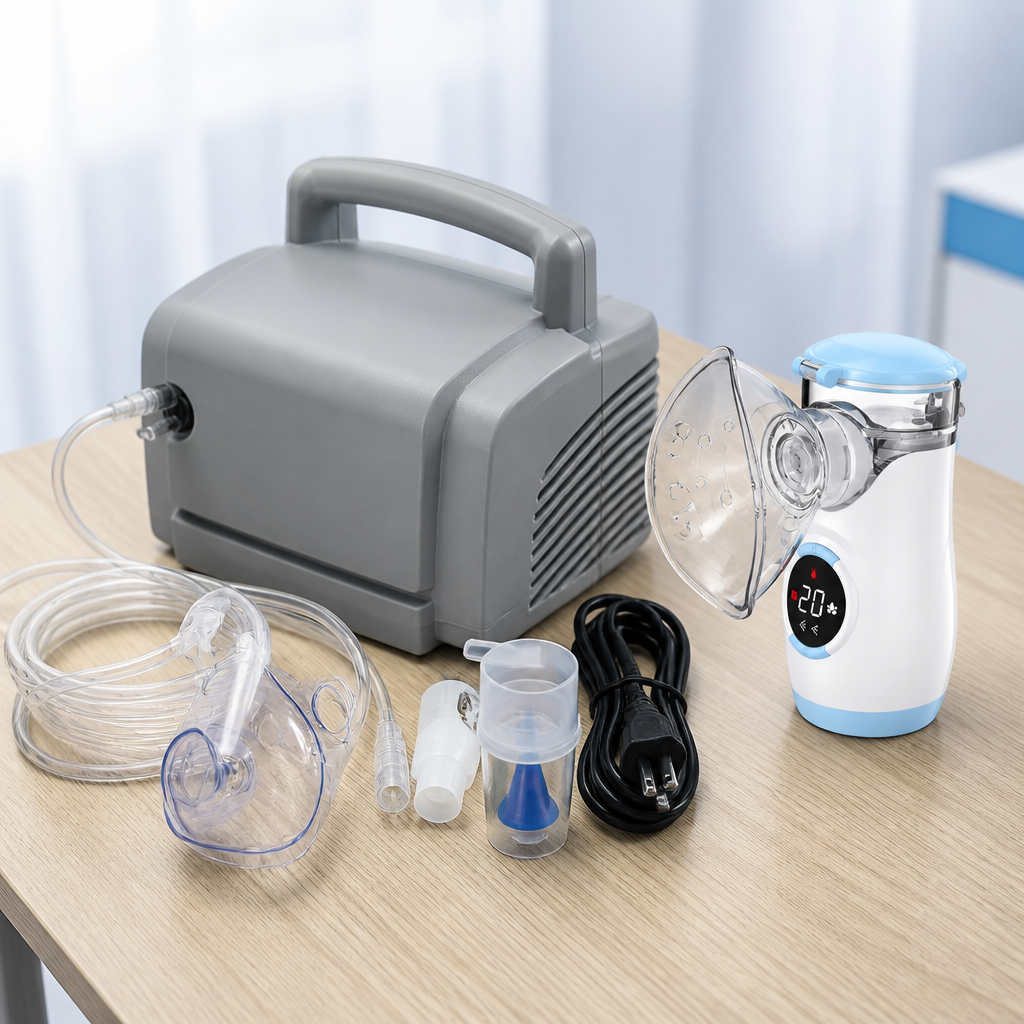
Most of us look at a large compressor and assume the size means extra capability. We did too.
Once you look at how it works, the size makes more sense. Much of that bulk is the air pump itself, plus the hose and cup it needs to turn liquid into mist.
So the real question is not how something small keeps up. It is why making mist ever needed a box that big.
A vibrating mesh replaces the air pump and hose
A traditional compressor pushes air through tubing into a medication cup, and that airflow helps turn the liquid into mist.
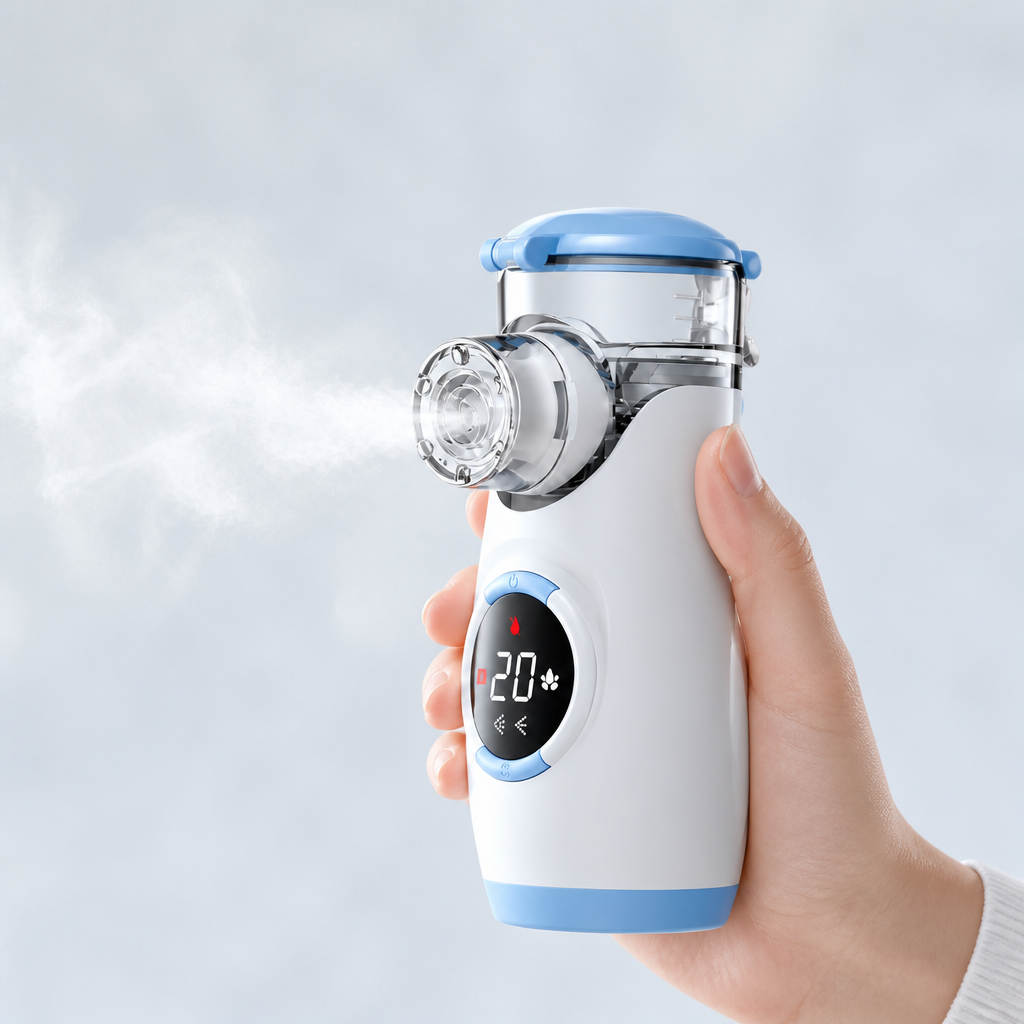
PureBreathe works differently. Inside the handheld unit is a fine mesh that vibrates. Liquid passes through tiny openings in that mesh and comes out as a fine mist directly, with no pump and no hose involved.
When we pressed the button, a visible mist appeared within seconds. To be clear, how much mist you can see does not tell you how effective a treatment is. That depends on the medication, the device and the instructions from your healthcare professional.
No compressor motor runs beside you

With a traditional nebulizer, you know it is on because the compressor motor starts up and keeps running for the whole session.
PureBreathe has no compressor at all. There is no motor box on the table beside you while you use it.
That changes where and when a session feels practical, such as in a shared room or late in the evening.
Nothing tethers you to the table or the wall

A traditional compressor typically plugs into a wall outlet, and a length of tubing connects it to the medication cup.
PureBreathe is USB rechargeable, so you charge it ahead of time and no wall connection is needed during use. There is also no tubing to connect.
You can sit in the chair you actually want to sit in, rather than the one nearest the socket.
Getting started involves far fewer pieces
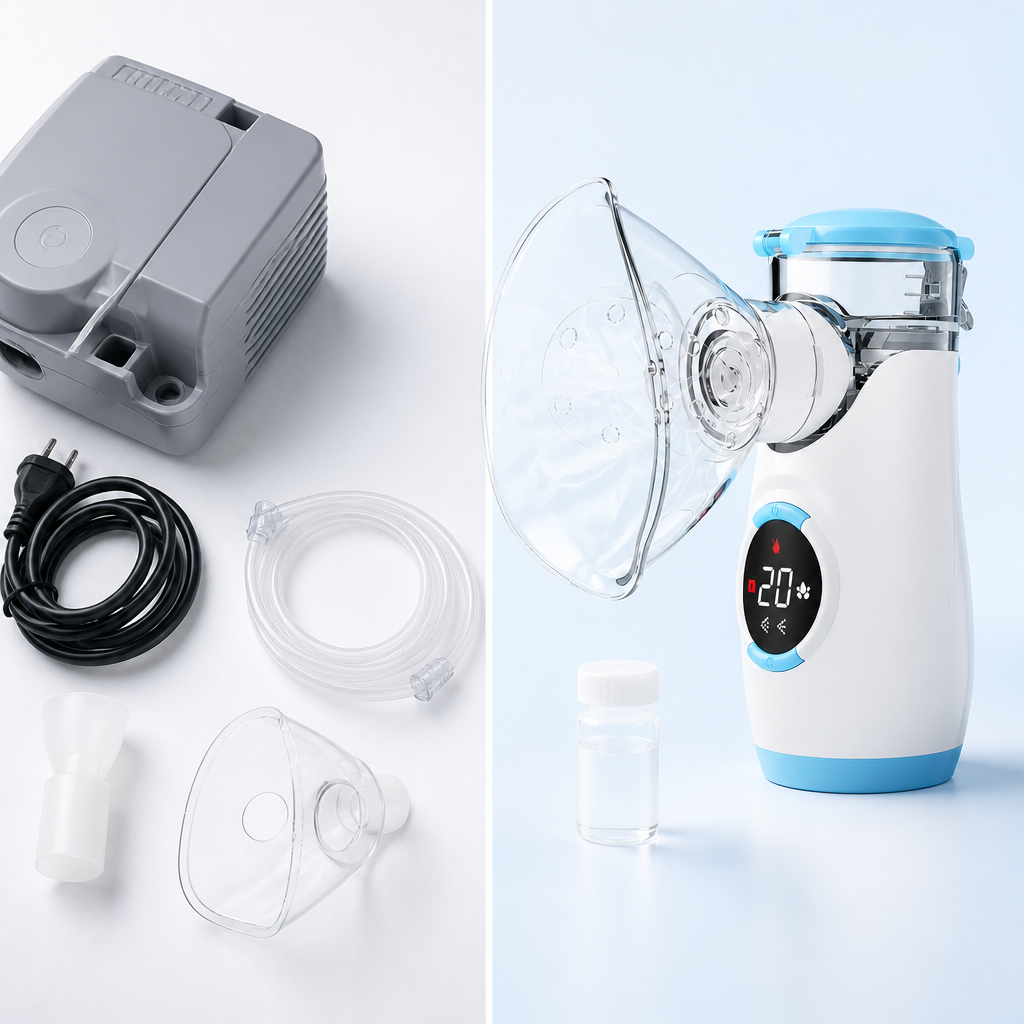
With a compressor, the session starts before the session starts. Position the machine, find an outlet, connect the tubing, attach the cup, then begin.
With PureBreathe, you add sterile saline or the liquid medication prescribed for nebulizing to the cup, attach the mouthpiece or mask, press the button, and breathe in the mist as directed by your healthcare professional.
No single step with a compressor is hard. But when you repeat the routine regularly, having fewer pieces to set out is the difference you feel most.
It goes where your day goes
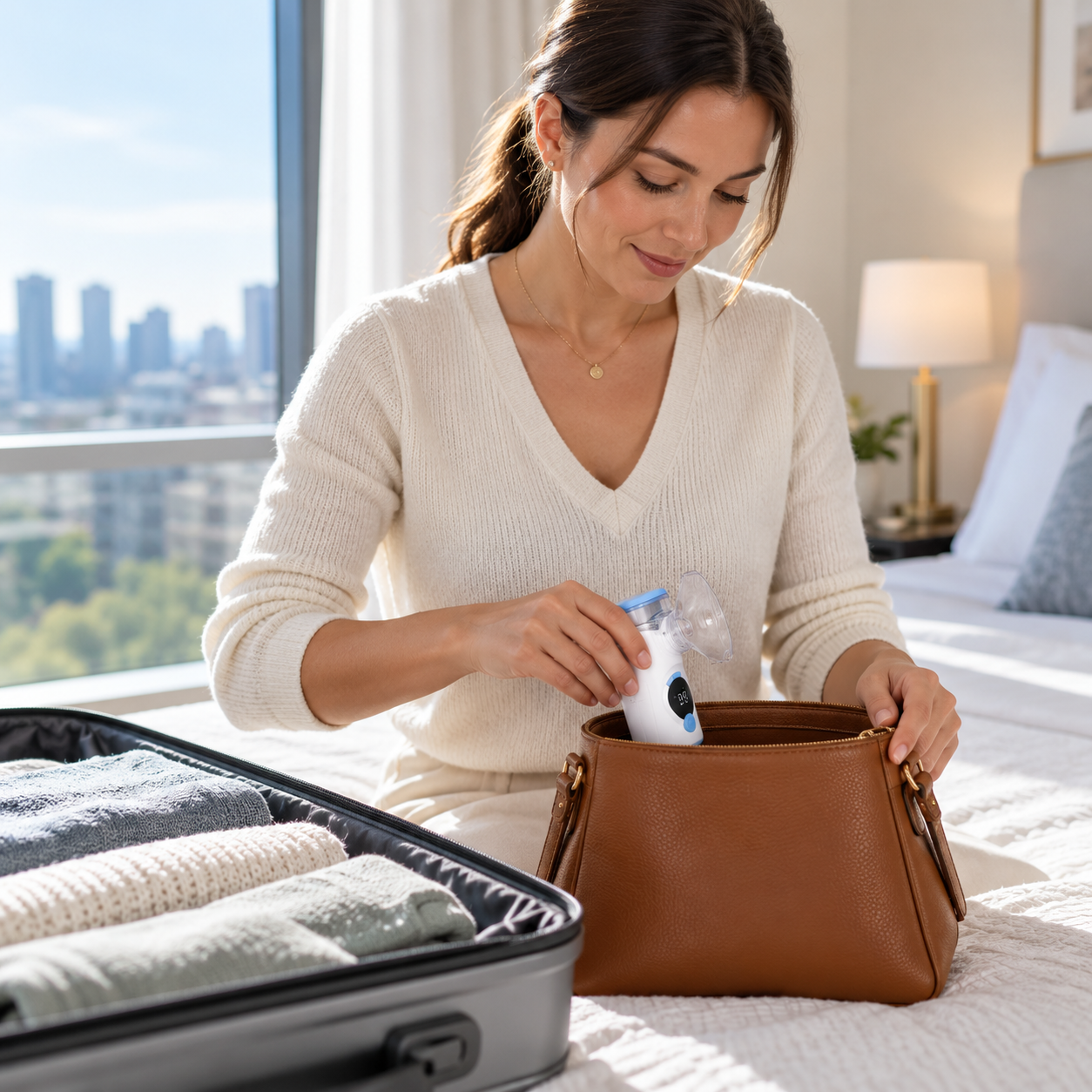
If your nebulizer never leaves one spot, a large compressor may not bother you much.
Step outside the house and it is a different story. The machine, the cord, the tubing, the cup and the accessories all have to come with you, and you need somewhere to set them up.
PureBreathe fits comfortably in one hand and slips into a handbag, work bag or carry-on. Charge it by USB and it is ready for a family visit, a hotel stay, a road trip or the next room.
None of this means a compressor is broken or wrong. It comes from a time when making mist meant pumping air through a hose. Mesh technology takes the pump and the hose away, and what is left fits in your hand. If you use a nebulizer with prescribed medication, check with your healthcare professional before changing devices. If you are ready to try the handheld format, here is what PureBreathe offers.
What makes up PureBreathe
