We Thought the Bigger Nebulizer Would Win. Then We Turned This One On.
We assumed the larger compressor would have the advantage. Then we switched both on and looked at how they actually worked.
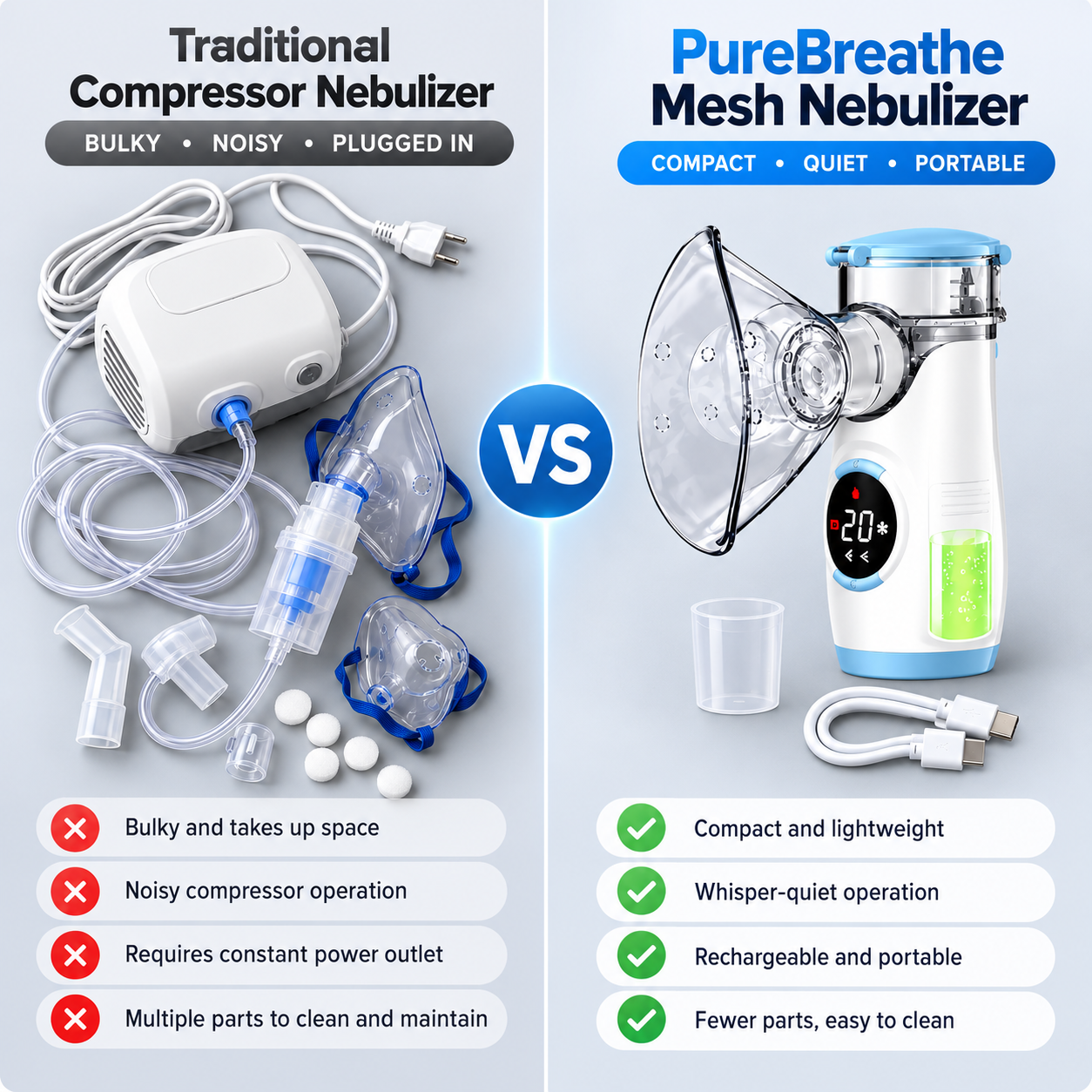
Most people picture a nebulizer the same way. A compressor on the table, a cord to the wall, a hose, a cup and a steady hum. It looks solid. It looks like it means business.
So when a nebulizer small enough to hold in one hand landed on our desk, we were doubtful. We wanted to see what the real difference was. We put the two side by side, used each one the way you would at home, and paid attention to everything in between.
At First Glance, the Bigger Machine Looked Like the Obvious Winner
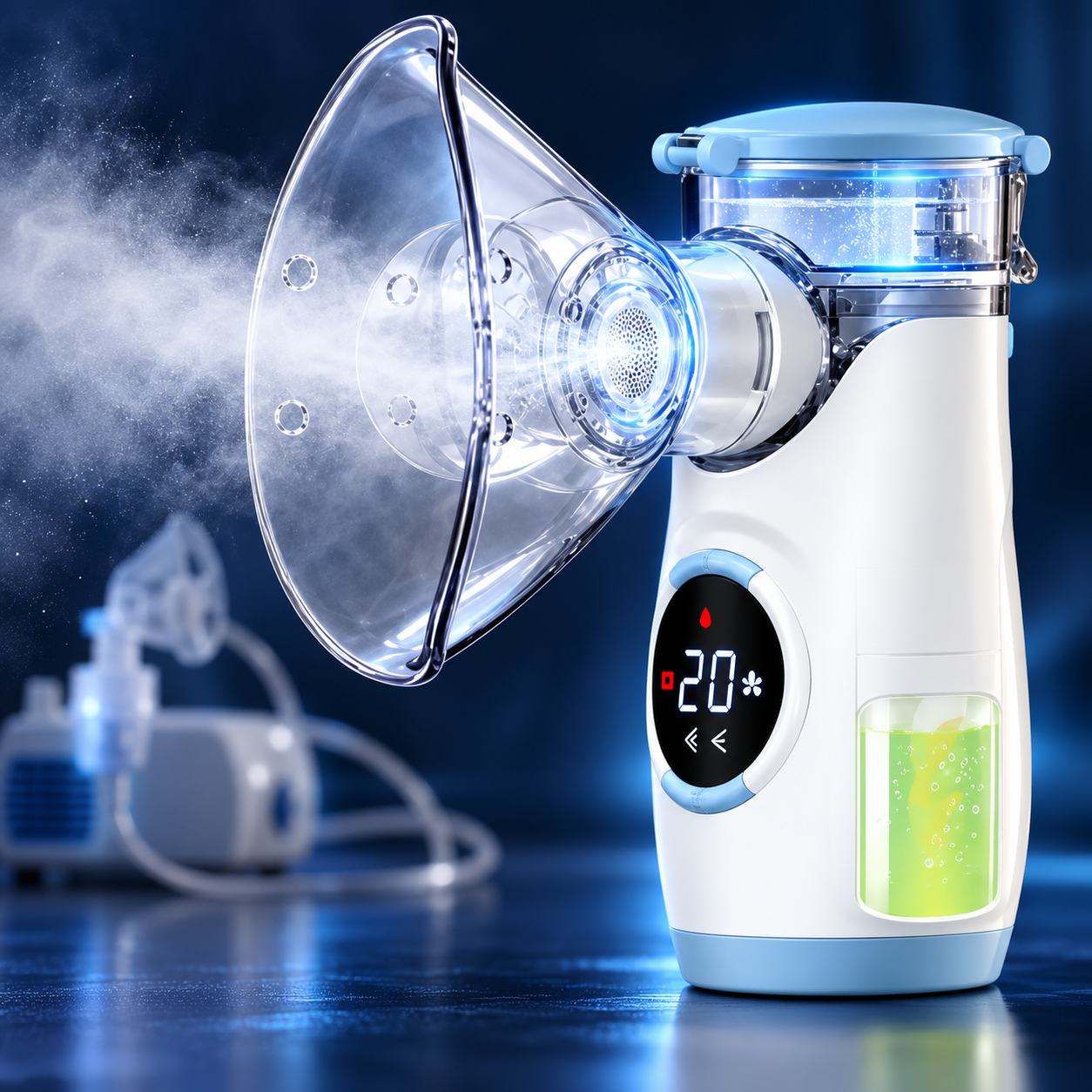
If you have used a traditional nebulizer before, you probably know the setup. A compressor sits on the table, tubing runs from the machine to the medication cup, everything plugs into the wall, and once it starts humming, you know it is running.
Next to that, PureBreathe almost looked too small.
It fits comfortably in one hand. There is no large compressor sitting beside it, no long hose running across the table, and no wall cord needed while you are using it.
Our first instinct was probably the same as yours: surely the bigger machine must be doing something the smaller one cannot.
But when we looked more closely, we realized we were judging the two devices almost entirely by their size.
And size, it turns out, has a lot to do with how each device creates the mist in the first place.
Then We Realized They Don’t Create Mist the Same Way
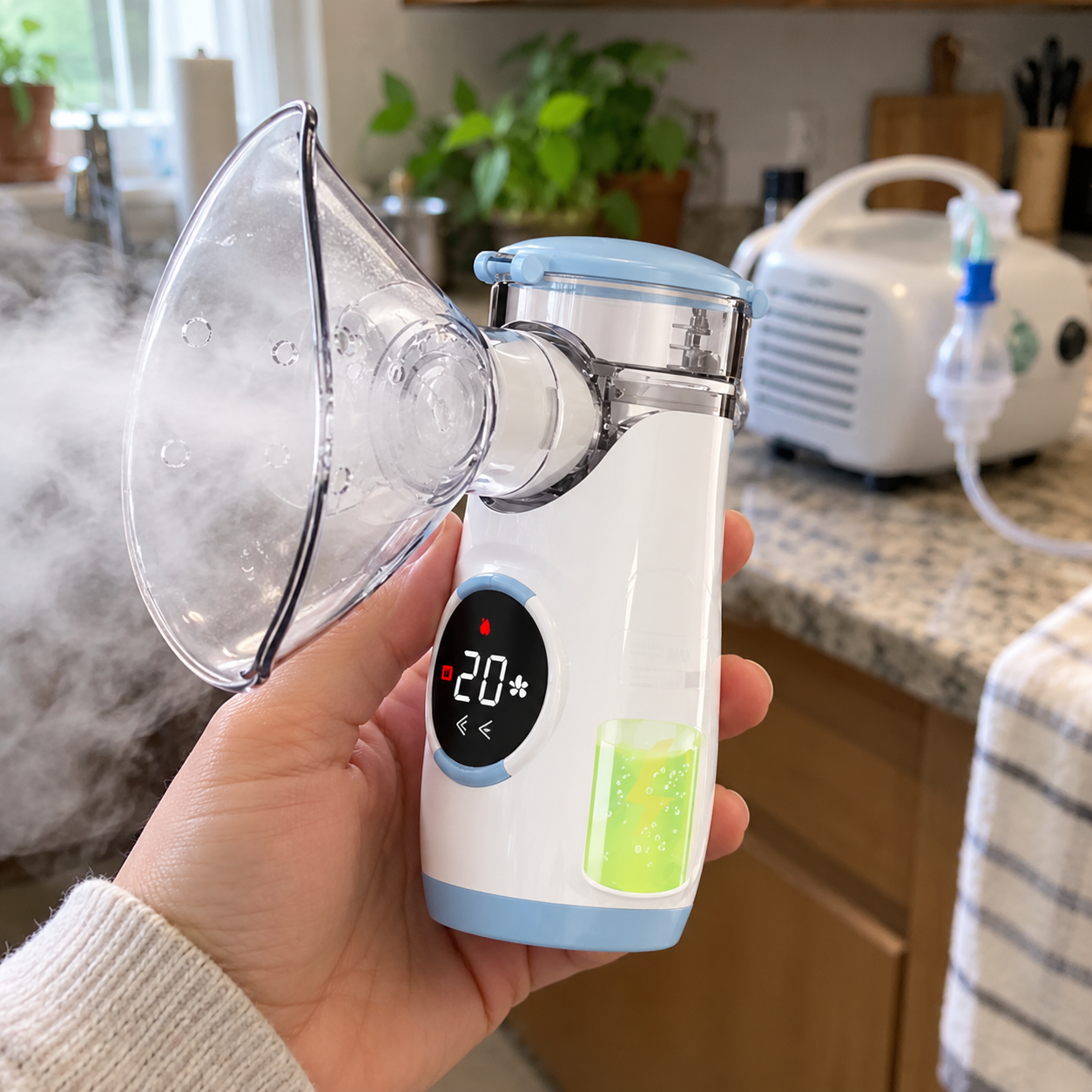
This was the part that made the size difference finally make sense.
A traditional compressor nebulizer uses an air pump. The compressor pushes air through tubing and into the medication cup, helping turn the liquid into a mist that can be inhaled.
PureBreathe takes a different approach.
Inside the handheld device is a fine vibrating mesh. Liquid passes through tiny openings in that mesh, creating a fine mist directly. Because it does not need the same air pump and long tubing setup, the entire device can be much smaller.
That was the first moment our assumptions started to change.
The larger machine was not necessarily large because a nebulizer has to be large. Much of that size comes from the compressor technology being used to generate the mist.
Once you understand that, a handheld mesh nebulizer stops looking like a miniature version of the same machine.
It is simply using a different method to do the job.
Then We Switched the Handheld One On
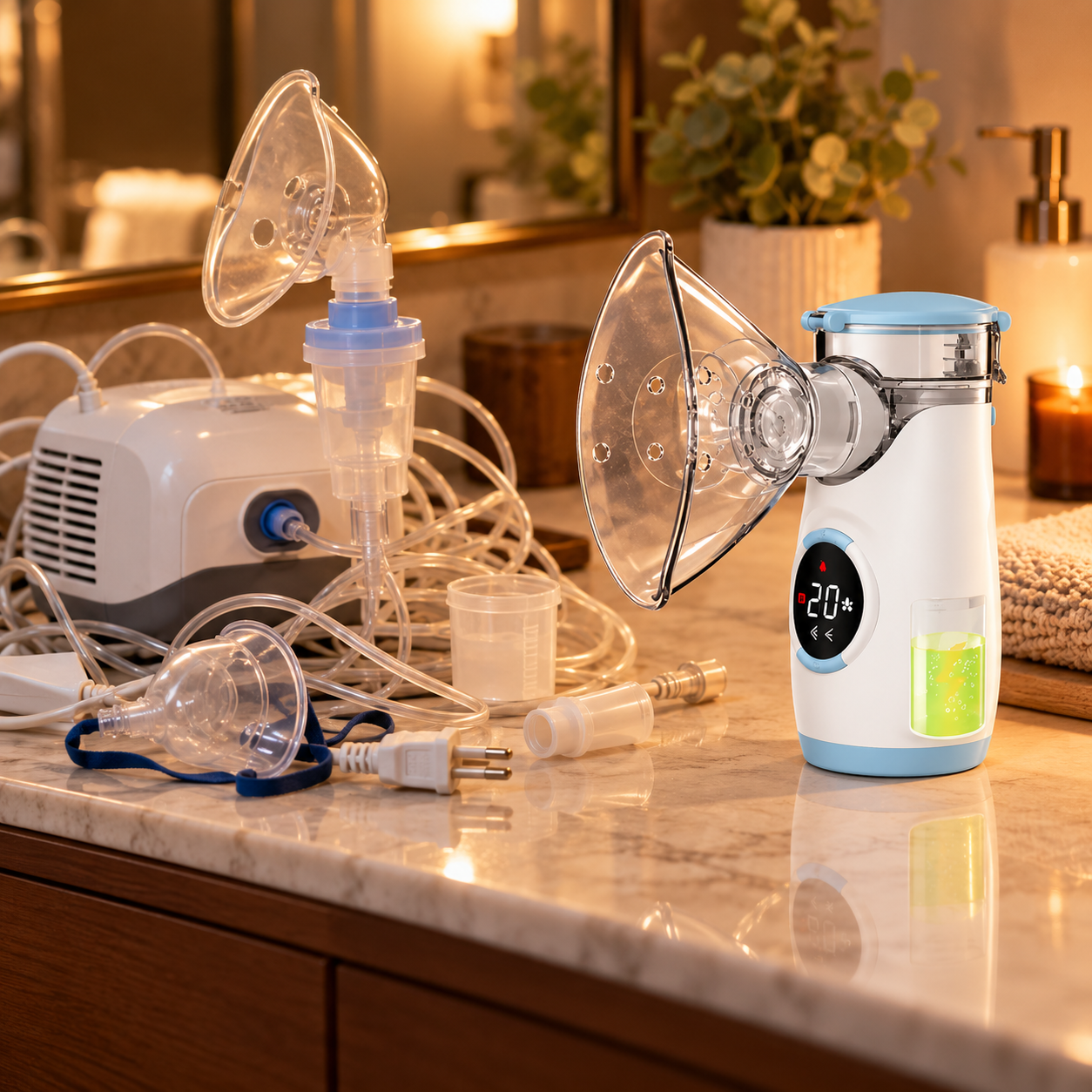
This was the moment that caught our attention.
Until then, PureBreathe still looked like a small gadget sitting next to a serious piece of equipment.
Then we pressed the button.
Within seconds, a visible fine mist began flowing from the handheld device.
No compressor suddenly roaring to life. No hose running across the table. No bulky machine beside it.
Just the device in one hand producing the mist it was designed to create.
We are not saying that the amount of visible mist alone tells you how effective any medical treatment will be. That depends on the medication, the device, and the instructions given by your healthcare professional.
But from a usability standpoint, seeing the handheld device operating made one thing very clear:
Small did not automatically mean complicated, flimsy, or incapable of producing a steady mist.
That was when we stopped asking why PureBreathe was so small and started asking why our old setup needed so much equipment around it.
Buy 2 Get 1 FREE with FREE shipping and a 30-day money-back guarantee.
Shop Now →The Biggest Everyday Difference Happened Before We Even Started
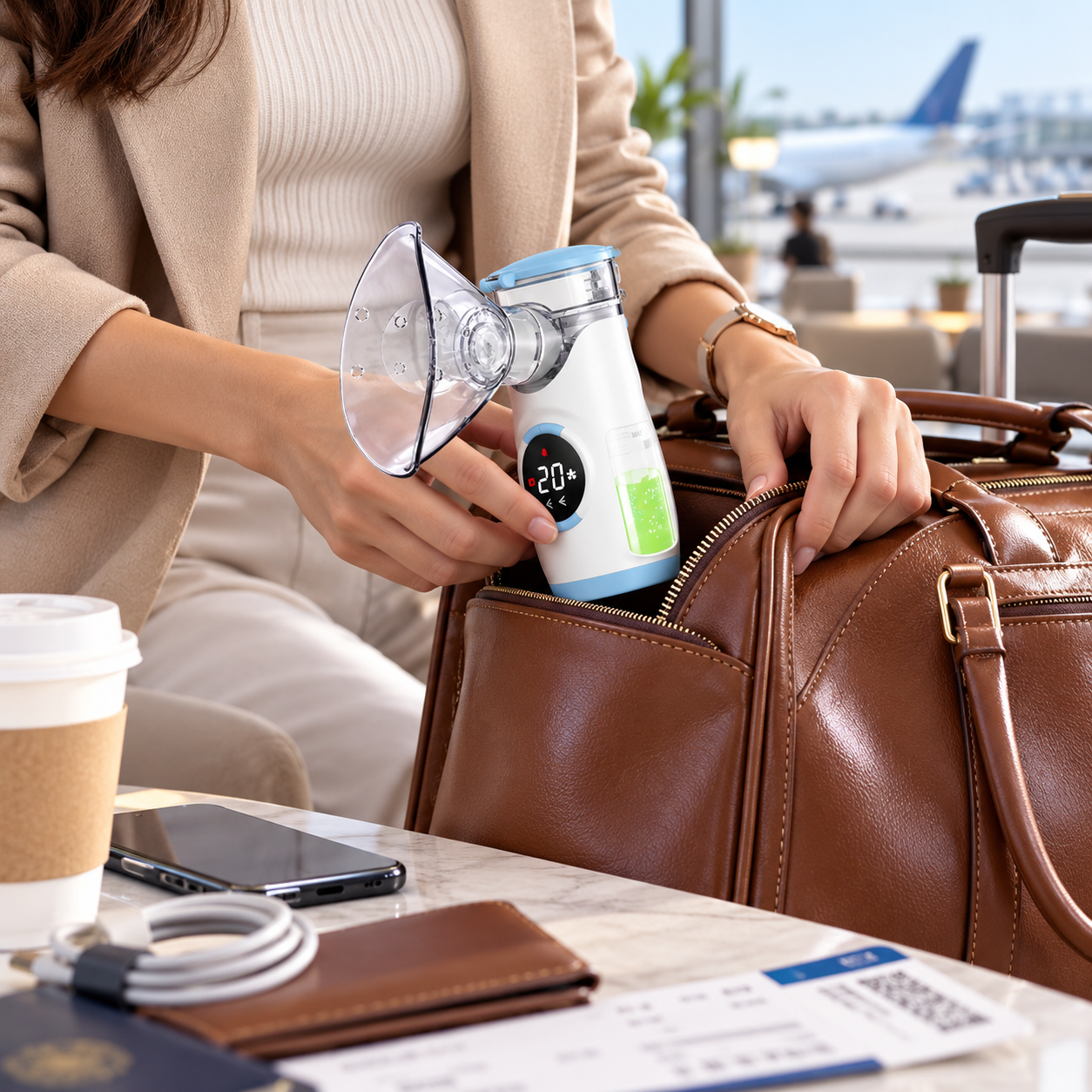
The more we used both setups, the more we noticed something that has nothing to do with the treatment itself.
It is everything you have to do before the treatment begins.
With a traditional compressor, there is usually a machine to position, a wall outlet to find, tubing to connect, a medication cup to attach, and several pieces sitting around the table.
None of those steps is especially difficult on its own.
But when you repeat the routine regularly, the extra setup starts to matter.
PureBreathe strips much of that away.
Add the sterile saline or prescribed liquid medication intended for nebulizing, attach the appropriate mouthpiece or mask, press the button, and begin your session.
There is no compressor to set up and no long hose connecting you to another machine.
It sounds like a small difference.
In everyday use, it may be one of the differences you notice most.
At Home, the Bulk Was Annoying. Away From Home, It Became the Real Difference.
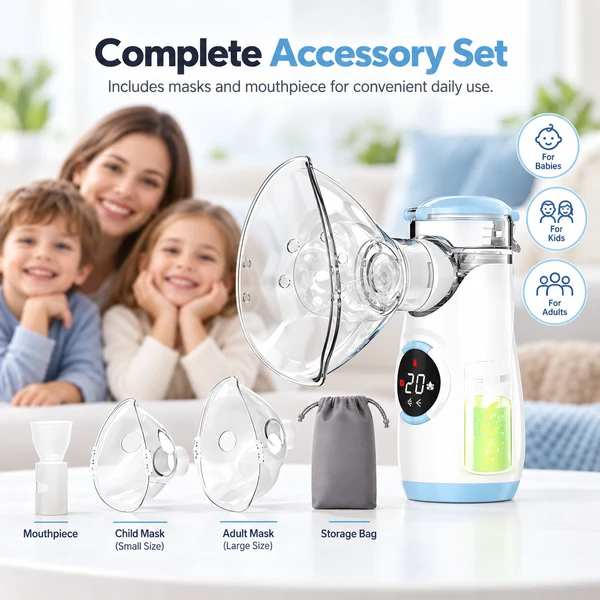
If your nebulizer stays in the same place every day, a large compressor may not feel like much of an inconvenience.
Leave the house, and the comparison changes quickly.
Now you have to think about the machine, its power cord, tubing, mask, medication cup, accessories, and where you will actually set everything up.
PureBreathe was designed to make that part easier.
The handheld unit is small enough to slip into a handbag, work bag, or carry-on, and it recharges over USB.
There is no compressor to carry and no need to keep the device connected to a wall outlet while you use it.
That matters when you are visiting family, staying in a hotel, going to work, taking a road trip, or simply moving from one room to another.
The traditional machine may work perfectly well sitting on a table at home.
The handheld format starts making much more sense when life does not happen at that table.
Our Verdict: Bigger Wasn’t the Advantage We Thought It Was
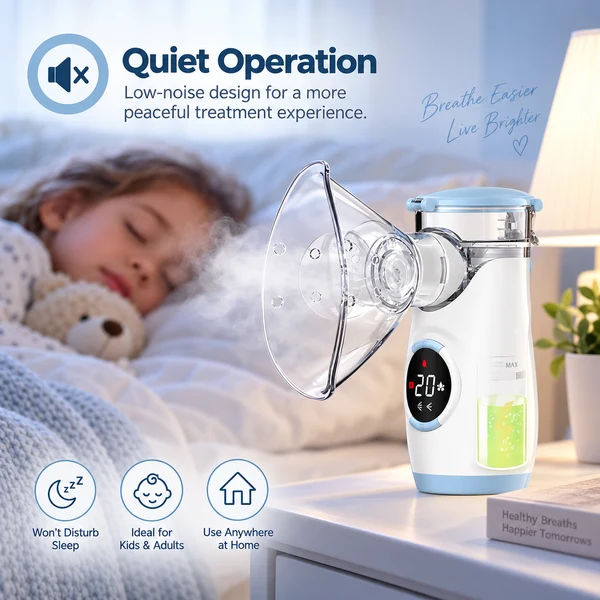
We started this comparison expecting the larger machine to have an obvious advantage simply because it looked more substantial.
By the end, that assumption did not seem nearly as convincing.
The two devices use different technologies to create mist.
A traditional nebulizer relies on a compressor, tubing, and an external setup.
PureBreathe uses vibrating mesh technology to create the mist inside a compact handheld unit.
That difference affects almost everything surrounding the session: how much equipment you need, how much space the device takes up, the amount of setup involved, the noise, and whether you can easily take it with you.
This comparison was never about claiming that every person should throw away their existing nebulizer or ignore the device recommended by their healthcare professional.
It was about a much simpler question:
If modern mesh technology can create a nebulizer small enough to hold in one hand, do you still need all that bulk for your everyday routine?
For people looking for a quieter, rechargeable and more portable option for sterile saline or medication prescribed for nebulizing, PureBreathe makes a compelling case.
Side by side: what you actually notice
| Feature | PureBreathe mesh nebulizer | Traditional compressor nebulizer |
|---|---|---|
| How the mist is made | ✓ A vibrating mesh turns liquid into mist directly | ✗ A compressor pushes air through tubing into a medication cup |
| Tubing | ✓ None | ✗ Tubing connects the compressor to the cup |
| Power during use | ✓ USB rechargeable, no wall connection needed | ✗ Typically plugs into a wall outlet |
| Size | ✓ Fits in one hand | ✗ Table-top unit |
| Sound | ✓ No compressor motor | ✗ Compressor motor runs during the session |
A session with PureBreathe
Fill
Add sterile saline or the liquid medication prescribed for nebulization to the cup.
Press
Press the button. The mist starts right away, with no compressor to warm up.
Breathe
Hold it comfortably and breathe in the mist as directed by your healthcare professional.
Clean and recharge
Clean it as described in the included instructions, then charge it by USB for next time.
- Uses vibrating mesh technology, with no compressor or tubing
- USB rechargeable
- For sterile saline or liquid medication prescribed for nebulization only
- $49.97 each, Buy 2 Get 1 Free with free shipping
- 30-day money-back guarantee
So which one is better? We would put the question differently. This was never really small versus powerful. It is an older setup versus a newer one.
The compressor did nothing wrong. It simply comes from a time when making mist meant pumping air through a hose. Mesh technology takes the pump and the hose out of the picture, and what is left fits in your hand.
If you use a nebulizer with prescribed medication, check with your healthcare professional before changing devices. If you are ready to try the modern format, PureBreathe is $49.97, and PureHearing is currently offering Buy 2 Get 1 Free with free shipping.
What changes when the compressor goes away
- No compressor and no tubing to connect.
- Fits in one hand and slips into a handbag or carry-on.
- USB rechargeable, with no wall socket needed during use.
- Quieter sessions without a compressor motor running.
- A three-step routine: fill, press, breathe.
